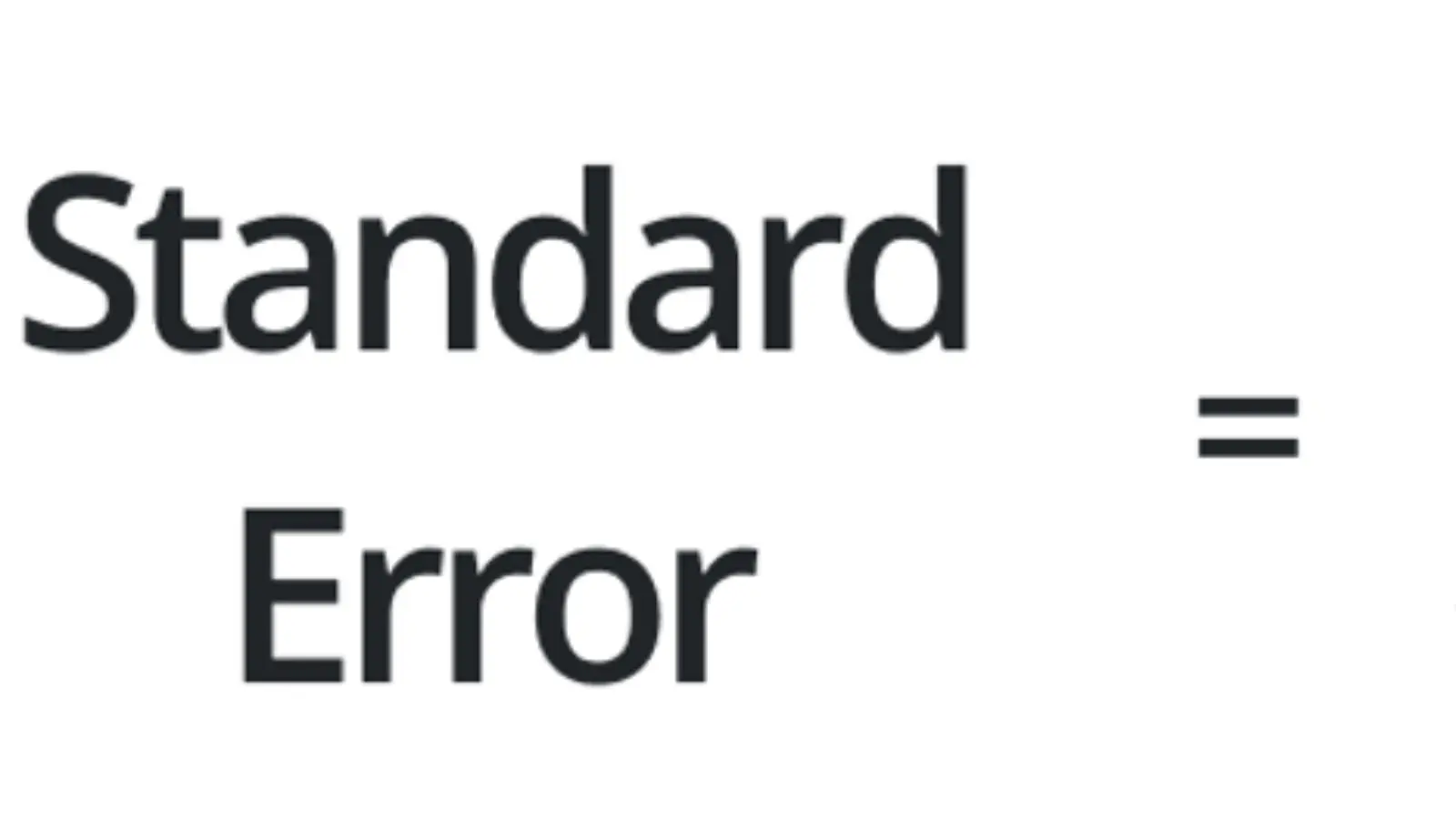
Understanding statistical concepts has become essential in research, academics, and even business analysis. One term that frequently pops up in studies, reports, and data-driven discussions is the standard error of the mean (SEM). People are searching for it because it helps measure the accuracy and reliability of sample averages, which is crucial for making informed decisions based on data.
The standard error of the mean is a statistical measure that tells us how much the sample mean (average) of a dataset is likely to vary from the true population mean. It helps researchers and analysts understand the precision of their sample results.
⚡ Quick Answer
The standard error of the mean (SEM) shows the expected variation of a sample mean from the true population mean. Simply put, it tells you how reliable your sample average is.
📚 Understanding the Standard Error of the Mean in Different Contexts
Although SEM is primarily a statistical concept, people sometimes encounter it in everyday conversations or content in different ways. Let’s break it down:
In Texting and Messaging
In casual messaging, SEM is rarely used, but students or professionals might reference it while discussing homework, assignments, or research. For example:
- “Our lab report looks good; the SEM is low, so our data is reliable.” ✅
It indicates accuracy and confidence in the shared data.
In Love and Relationships
SEM doesn’t directly apply to romance, but if someone jokingly mentions it in love discussions, it might be a fun, nerdy way to talk about averages or expectations:
- “Based on my dating experiences, the SEM suggests you’re in the top 10%!” 💌
Here, it’s metaphorical and shows a statistical way of measuring patterns in behavior.
In Slang and Casual Language
In slang, SEM is almost never used. However, people who are into academia or data science humor might use it casually to indicate precision or uncertainty:
- “Chill, the SEM says your guess is probably close enough.” 😎
It’s a subtle, intellectual way of commenting on accuracy.
On Social Media Platforms (TikTok, Instagram, Snapchat, etc.)
SEM might appear on educational posts, study tips, or science memes. For example:
- TikTok videos explaining statistics might say: “Notice the SEM decreasing as your sample size grows!” 🎓
- Instagram infographics often use SEM to explain data reliability in simple terms.
The takeaway: SEM is mainly informative, not casual or playful.
Spiritual or Symbolic Meaning
The standard error of the mean has no spiritual or symbolic meaning. It is purely a mathematical and statistical concept.
Numerology or Cultural Meaning
SEM also does not have a numerological or cultural significance. Its importance is strictly in data analysis, research, and statistics.
🧠 Examples & Usage
Here are some real-life examples to understand SEM:
| Scenario | Sample Mean | Standard Deviation | Sample Size | SEM Calculation |
| Students’ test scores | 80 | 10 | 25 | SEM = 10 / √25 = 2 |
| Product weight (grams) | 200 | 15 | 36 | SEM = 15 / √36 = 2.5 |
Example in words:
“The average score of the class was 80, and the SEM was 2, meaning the true class average is likely between 78 and 82.”
Context matters:
- Small SEM → high precision
- Large SEM → more variability and uncertainty
❓ Common Questions (FAQ)
1. What does the standard error of the mean really mean?
It tells you how much your sample mean might differ from the actual population mean.
2. Is the SEM positive or negative?
SEM is always positive because it represents magnitude of variation, not direction.
3. Does SEM indicate accuracy or reliability?
Yes, smaller SEM values indicate more reliable sample means.
4. How should someone interpret SEM?
Use it to assess confidence in your sample data. Smaller SEM → higher confidence in the mean.
🏁 Conclusion
In simple terms, the standard error of the mean (SEM) is a tool that shows how trustworthy your sample average is. By understanding SEM, you can evaluate data more confidently, whether in academics, research, or practical analysis. Now, when you encounter SEM, you know it’s all about precision, reliability, and statistical insight.
