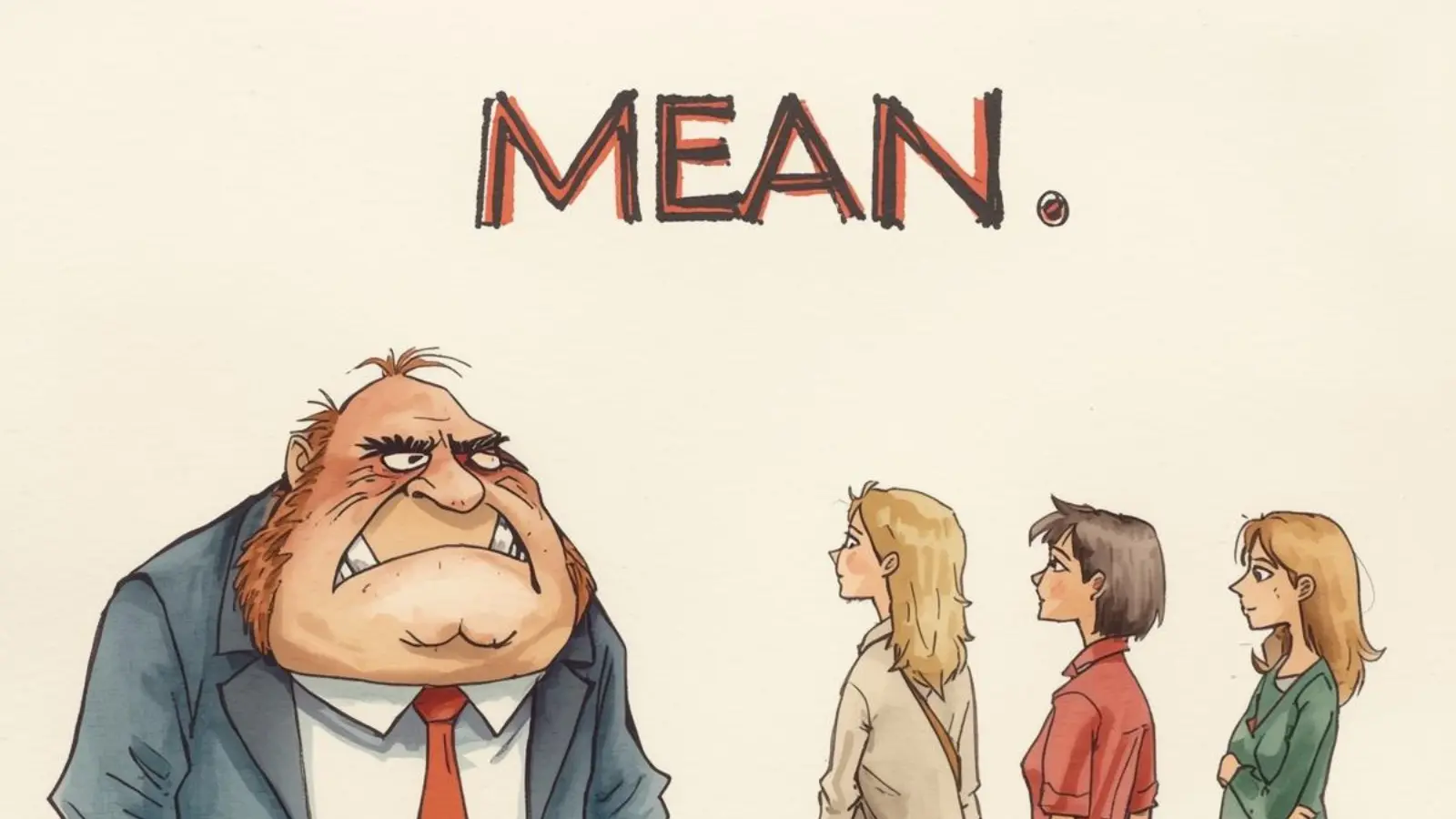
In today’s fast-paced world, people often come across the term “mean” in conversations, texts, social media, and even in school assignments. But what does it really mean? Whether you’re chatting with friends, reading online posts, or learning math, understanding what a mean is can save confusion and help you communicate clearly. From casual slang to mathematical contexts, the word “mean” has multiple interpretations. In this article, we’ll break down what a mean is, provide examples, and answer all your common questions in simple language.
⚡ Quick Answer
A mean is generally a way to describe something as average, unkind, or in the middle, depending on context. In math, it’s the average of numbers, while in casual language, it often refers to someone being unkind or harsh.
📚 Meaning of “Mean” in Different Contexts
1. In Texting and Messaging
In texting, mean usually refers to someone being unkind, sarcastic, or rude. For example:
- “She was so mean in that text 😒.”
- “Don’t be mean, I was just joking!”
It’s often used to describe tone or attitude in short messages.
Key Points:
- Often reflects emotions or behavior.
- Can be playful or serious depending on emojis or context.
2. In Love and Relationships
In relationships, calling someone mean typically indicates hurtful behavior or harsh words. For example:
- “He was mean to me yesterday 😢.”
- “Don’t be mean, I care about you 💖.”
Sometimes, it’s used playfully, like teasing your partner.
Key Points:
- Usually negative, but context matters.
- Can reflect sarcasm or flirting in some scenarios.
3. In Slang and Casual Language
In everyday slang, mean can also mean something impressive or excellent, especially in informal speech:
- “She makes a mean lasagna 🍝.”
- “That’s a mean skateboard trick 🛹!”
Here, “mean” is positive, showing skill or quality.
Key Points:
- Positive or negative meaning depends on context.
- Often used to describe skills, abilities, or intensity.
4. On Social Media Platforms
On platforms like TikTok, Instagram, and Snapchat, mean is widely used to describe:
- Rude or harsh comments: “Why are people so mean online? 😡”
- Impressive content: “He has a mean dance routine 🕺🔥”
Tips for Social Media Use:
- Emojis help clarify tone.
- Avoid misinterpreting “mean” as always negative.
5. Spiritual or Symbolic Meaning
In some spiritual or symbolic interpretations, mean can represent balance or moderation, reflecting the idea of staying in the “middle path” in life.
Key Points:
- Can symbolize fairness or neutrality.
- Often linked to avoiding extremes in behavior or emotions.
6. Numerology or Cultural Meaning
In mathematics or cultural contexts, mean is most commonly known as the average of a set of numbers:
Mean=Sum of all numbersTotal number of values\text{Mean} = \frac{\text{Sum of all numbers}}{\text{Total number of values}}Mean=Total number of valuesSum of all numbers
Example:
- Numbers: 4, 7, 10
- Mean = (4 + 7 + 10) ÷ 3 = 21 ÷ 3 = 7
Key Points:
- Used in statistics, math, and data analysis.
- Represents the central or typical value of a dataset.
🧠 Examples & Usage
Here are some real-life examples to help you understand mean:
| Context | Example | Meaning |
| Texting | “Stop being so mean 😡” | Unkind behavior |
| Relationships | “You’re mean for teasing me 💔” | Harsh or hurtful |
| Slang | “He makes a mean pizza 🍕” | Impressive or skillful |
| Social Media | “That was a mean TikTok dance 🕺🔥” | Highly skilled or intense |
| Math | Numbers: 5, 10, 15 | Average value = 10 |
Tip: Context always matters. Emojis, tone, and surrounding words can completely change whether “mean” is positive or negative.
❓ Common Questions About “Mean”
Q1. What does “mean” really mean?
It can mean unkind, average, or impressive, depending on context.
Q2. Is “mean” positive or negative?
- Negative: when describing behavior or attitude.
- Positive: in slang, when describing skills or quality.
Q3. Is “mean” romantic?
Rarely. It’s usually negative in romantic contexts, unless used playfully.
Q4. How should someone reply to “mean”?
- If playful: “Haha, I know 😜”
- If negative: “I didn’t mean to hurt you 😔”
🏁 Conclusion
In simple words, “mean” can be unkind, impressive, or average, depending on how it’s used. Understanding context is key. Whether you’re texting a friend, analyzing numbers, or reading social media posts, you now fully understand what a mean is.
