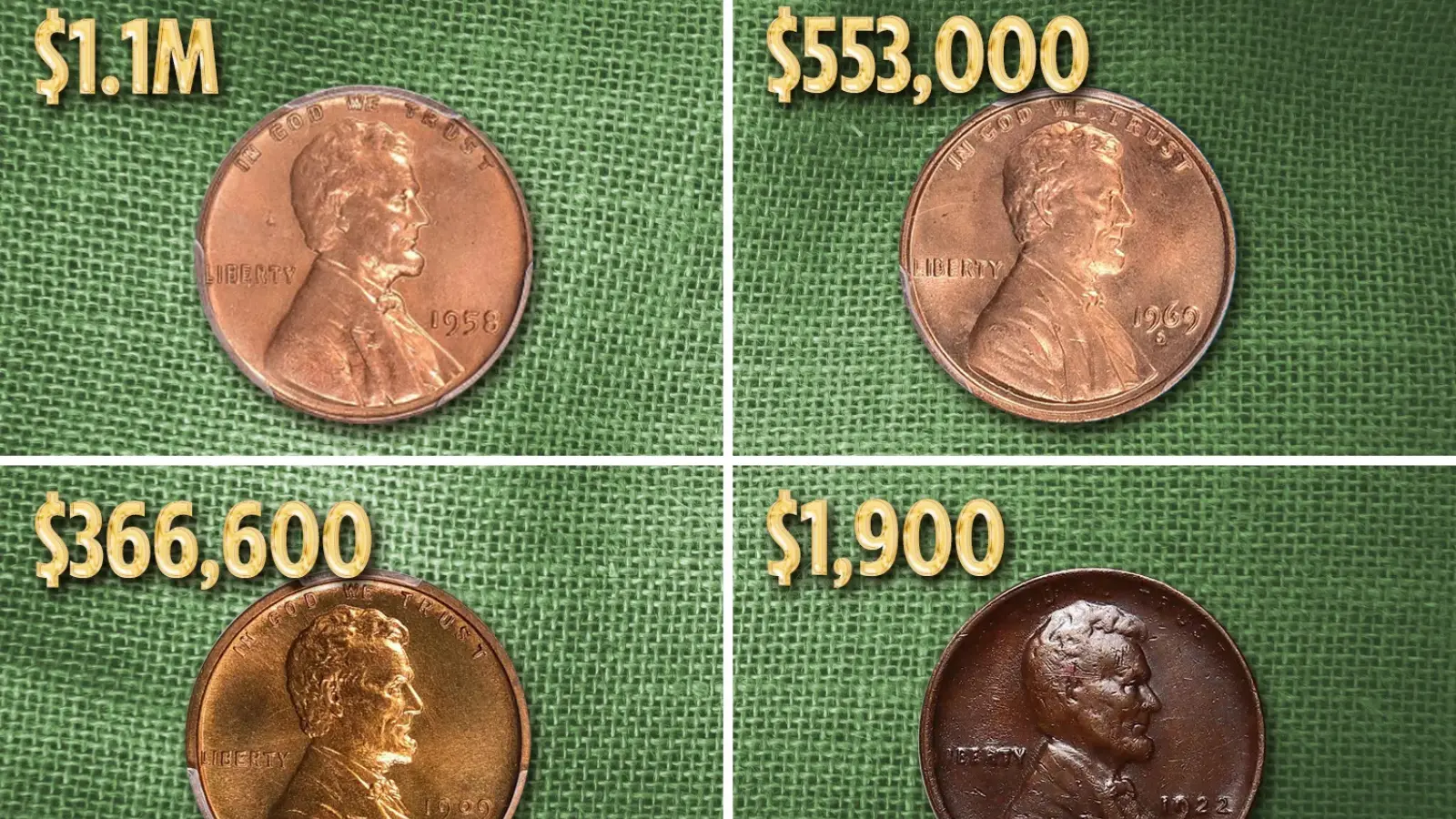
Many people search for “what pennies are worth money” expecting a single net worth figure. In reality, coins don’t have net worth the way people or companies do. Instead, rare pennies have market value—what collectors are willing to pay based on rarity, condition, and demand.
This ready-to-publish guide explains which U.S. pennies can be valuable, how coin value works, current price ranges (estimates), why prices change, and why rare pennies matter globally. Values are presented conservatively using ranges commonly reported by major numismatic authorities and auction results. All figures fluctuate with market conditions.
What “Net Worth” Means — and Why It Doesn’t Apply to Pennies
Net worth usually means assets minus liabilities for a person or business. Coins don’t have liabilities, ownership stakes, or income streams.
For coins, the correct concept is fair market value—the price achieved at auction or private sale.
Key takeaway: When people say “pennies net worth,” they usually mean the total market value of a rare penny or a collection of pennies.
How Pennies Gain Value
A penny’s value depends on four core factors:
- Rarity: Low mintages or errors (misstrikes, wrong metal).
- Condition (Grade): Professional grading matters; higher grades command premiums.
- Demand: Collector interest can rise or fall.
- Provenance: Documented history or famous discoveries can add value.
Professional grading firms and auction houses set benchmarks, while reporting and analysis from outlets like Forbes, Bloomberg, and Reuters often reference headline-making sales.
Pennies That Are Worth Real Money (Estimated Market Values)
Disclaimer: Values below are estimates based on recent public sales and can change with grade and market demand.
1) 1943 Bronze Lincoln Wheat Penny
- Why it’s rare: Most 1943 pennies were steel; a few bronze planchets slipped through.
- Estimated value: $100,000 to $1.7+ million (top examples at auction)
2) 1909-S VDB Lincoln Wheat Penny
- Why it’s rare: Low mintage with designer initials.
- Estimated value: $700 to $60,000+ (condition dependent)
3) 1955 Doubled Die Obverse Penny
- Why it’s rare: Strong doubling on date and lettering.
- Estimated value: $1,000 to $125,000+
4) 1877 Indian Head Penny
- Why it’s rare: One of the lowest mintages in the series.
- Estimated value: $900 to $10,000+
5) 1944 Steel Penny
- Why it’s rare: Opposite error of 1943 (steel instead of bronze).
- Estimated value: $75,000 to $500,000+
Quick Reference Table (Collector Estimates)
| Penny | Year | Key Feature | Estimated Market Value* |
|---|---|---|---|
| Lincoln (Bronze) | 1943 | Wrong metal | $100k – $1.7M+ |
| Lincoln (VDB) | 1909-S | Low mintage | $700 – $60k+ |
| Lincoln (DDO) | 1955 | Doubled die | $1k – $125k+ |
| Indian Head | 1877 | Scarce year | $900 – $10k+ |
| Lincoln (Steel) | 1944 | Wrong metal | $75k – $500k+ |
*Values vary widely by grade and authenticity.
“Ownership Stakes” in the Coin World
Coins don’t issue shares. Ownership means physical possession or documented custody (e.g., certified holders). The closest parallel to “stakes” is:
- Single-owner collections (private or institutional)
- Auction consignments (temporary custody)
- Museum holdings (not for sale)
Historical Value Growth (Why Some Pennies Skyrocketed)
- Discovery moments: When a rare error is confirmed, prices can jump.
- Grading standards: Tighter grading can elevate top-tier examples.
- Macroeconomics: Inflation and currency debasement can increase interest in tangible assets.
- Media coverage: High-profile sales covered by global outlets can boost demand.
Why Penny Values Change Frequently
- Auction cycles: New records reset expectations.
- Population reports: Updated counts from grading firms affect scarcity.
- Collector trends: Series fall in and out of favor.
- Economic conditions: Recessions or booms influence discretionary spending.
Global Relevance for International Readers
- Alternative asset class: Rare coins are a portable store of value.
- Cross-border demand: Major auctions attract bidders worldwide.
- Cultural history: Coins preserve industrial and artistic heritage.
- Currency insights: Errors reflect minting processes across eras.
How to Check If Your Penny Is Valuable
- Verify the date and mint mark.
- Use a magnet (steel vs. bronze test for key years).
- Inspect for errors (doubling, wrong metal).
- Get professional grading before selling.
- Compare recent auction results, not asking prices.
FAQ (Optimized for Featured Snippets & Voice Search)
1) What is the most valuable penny ever sold?
The 1943 bronze Lincoln penny holds record prices, with top examples selling for over $1 million, depending on grade.
2) Are all old pennies valuable?
No. Age alone doesn’t create value. Rarity, condition, and demand matter most.
3) Can a penny really be worth $100,000?
Yes. Certain error and low-mintage pennies have sold well above that level at auction.
4) Do ungraded pennies have value?
They can, but professional grading usually increases buyer confidence and price.
5) Where should I sell a rare penny?
Major auction houses, reputable coin dealers, or certified marketplaces—after grading.
Summary
There is no single “net worth” for pennies. Instead, select U.S. pennies have substantial market value driven by rarity, condition, and collector demand.
Prices fluctuate, records are grade-specific, and professional authentication is essential.
For global collectors, rare pennies remain a historically rich, alternative collectible with transparent auction pricing.
