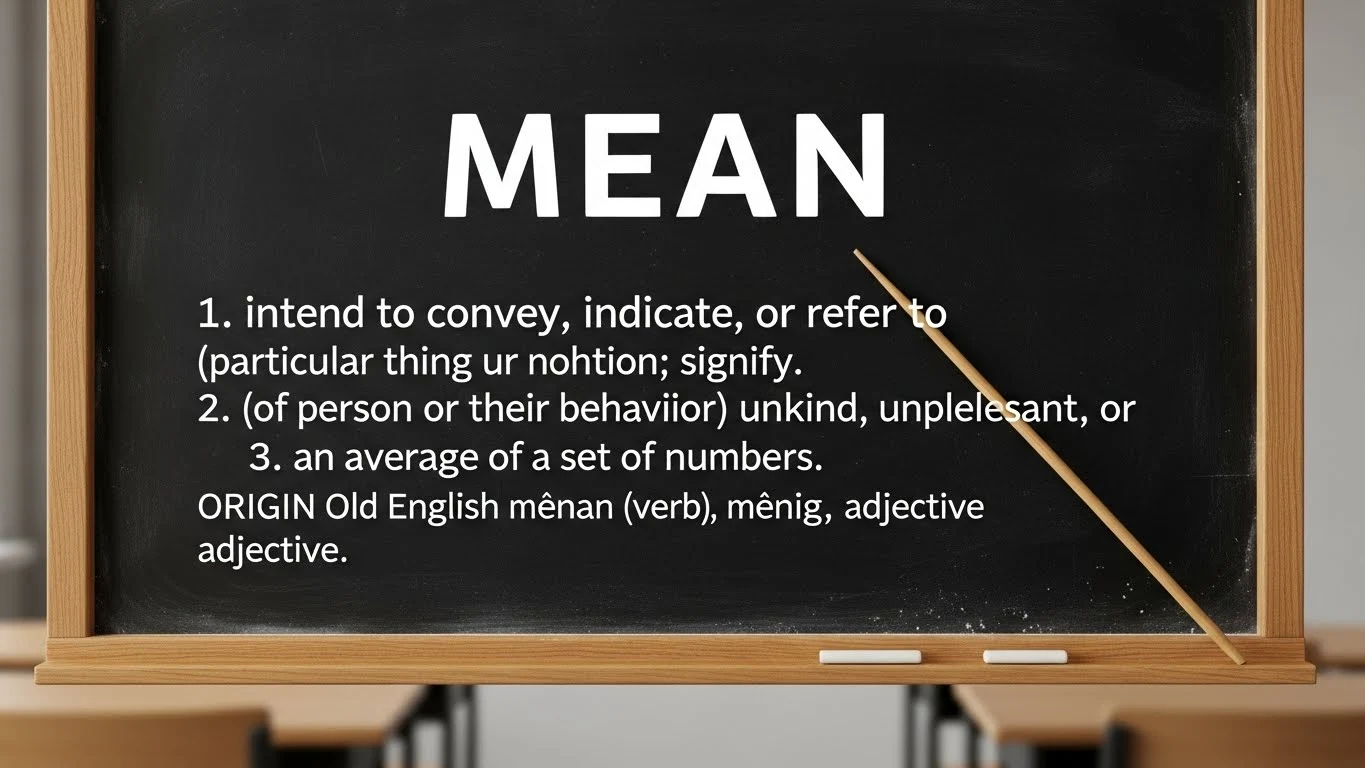
In today’s fast-paced digital world, the term “mean” is trending more than ever. People are curious about its meaning because it appears in texting, social media, and casual conversations daily.
Whether someone says “You’re mean” or uses it in a caption, understanding what ‘mean’ really means is important to avoid confusion and communicate effectively.
Quick Answer:
The word “mean” generally refers to being unkind, harsh, or rude to someone.
It can also indicate something average or significant depending on the context.
🔹 What Does “Mean” Really Mean?
The word mean has multiple meanings depending on how it’s used:
- Negative behavior: Acting unkind, rude, or hurtful.
- Average or middle value: In mathematics or statistics, it represents the average of numbers.
- Intent: Sometimes, it shows intention, as in “I didn’t mean to hurt you.”
Understanding the context is key to interpreting its meaning correctly.
📱 Mean in Texting and Messaging
In texting, mean is often used to describe unkind words or playful teasing:
- Example: “Stop being so mean 😢”
- Context: Could be serious if someone is hurt or jokingly between friends.
It’s important to note emojis and tone can drastically change how the word is perceived in messages.
❤️ Mean in Love and Relationships
In romantic or personal relationships, mean often highlights emotional impact:
- Example: “You were mean to me yesterday.”
- Impact: Signals feelings of hurt, disappointment, or resentment.
Sometimes, couples use it jokingly as playful teasing, but repeated meanness can indicate a problem in communication.
😎 Mean in Slang and Casual Language
In casual conversation, especially among younger generations:
- Mean = impressive or cool
- Example: “That skateboard trick was mean!”
- Context: Completely positive, showing admiration or awe.
This shows how tone and context can flip the meaning from negative to positive.
📱 Mean on Social Media Platforms
On platforms like TikTok, Instagram, or Snapchat:
- Mean captions or comments can range from criticism to playful banter.
- Example: “Don’t be mean, just post positive vibes 😇”
- Context: Helps in understanding online etiquette and avoiding misinterpretation.
🌟 Spiritual or Symbolic Meaning
In some spiritual or symbolic contexts, mean can represent:
- Introspection: Being mindful of words to avoid harming others.
- Karma or energy: Negative words (mean behavior) may attract negative experiences.
This usage is less common but adds depth to how people interpret “mean” in personal growth.
🔢 Numerology or Cultural Meaning
While mean doesn’t have a strict numerology significance, culturally:
- Being mean is often viewed as socially negative.
- In contrast, some cultures celebrate “mean skills” in art, sports, or cleverness, emphasizing talent rather than meanness.
🧠 Examples & Usage
Here’s how mean can appear in real life:
| Context | Example | Meaning |
| Texting | “You’re mean 😅” | Playful teasing |
| Romance | “Why are you so mean to me?” | Hurt or unkind behavior |
| Slang | “That car is mean!” | Impressive or cool |
| Social Media | “Don’t be mean online” | Warning against negativity |
Notice how context changes everything—the same word can feel hurtful, complimentary, or humorous.
❓ Common Questions About “Mean”
1. What does “mean” really mean?
It can mean unkind, rude, average, or impressive depending on the situation.
2. Is “mean” positive or negative?
Usually negative, but in slang, it can be positive.
3. Is “mean” romantic?
Only when it refers to hurtful behavior in relationships, otherwise it’s not romantic.
4. How should someone reply to “mean”?
- Playful context: Respond jokingly.
- Hurtful context: Address the behavior calmly.
- Clarify intent: “I didn’t mean to hurt you” works well.
🏁 Conclusion
The word “mean” is versatile. It can describe unkind behavior, represent something impressive, or indicate intention. Understanding context is crucial to interpreting its meaning correctly.
Now, whether you see it in a text, social media post, or conversation, you can confidently understand what “mean” truly means.
